Returning to practice soon!

humans as trees.png


I have had the most incredible past year travelling the world, learning new things, challenging myself in new ways, struggling with new internal processes. It's been great. It's been hard. This is life - always a balance of both. All cliches aside, I genuinely feel like this past year changed me as a person significantly for the better. This will no doubt roll into my professional life and I am really looking forward to this.

I'm returning to work in October 2018 at the new Lives Lived Well Specialist Centre (formerly Banjara) in Burleigh Heads. I considered a few other options but at the end of the day my heart won out with a familiar environment and an encouraging network already in the community.

I found the above quote the other day and I've rarely read something that describes me so perfectly when I am at work. My inner voice of judgment is dropped and each of my clients are 'trees' that I get to see for who they are and understand the unique set of life events that have shaped them as people. It is this paradoxically peaceful serenity from my own busy mind that I love so much about the counselling room. 

Contact for an appointment or for more information about my approach. Look forward to connecting or catching up soon. 

Tristan :)

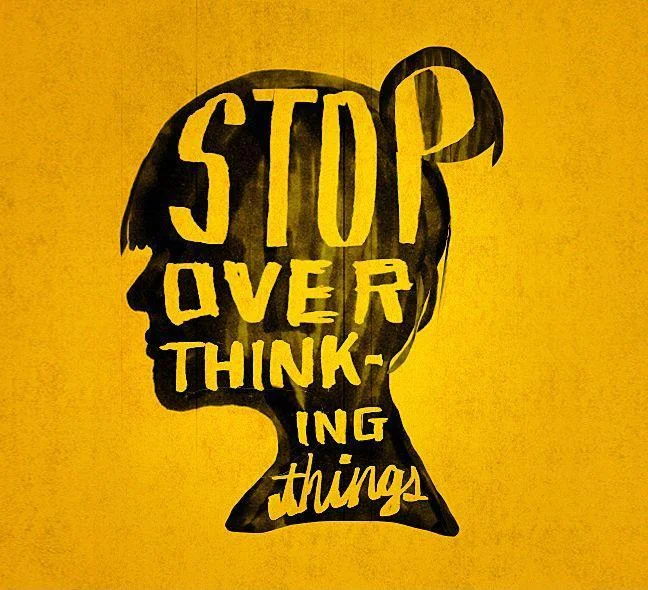
Five Unique Ways to Manage Overthinking


Anxious overthinking is horrible, right? When you get caught in those loops where you're just thinking about one single event, a relationship, our self, our future over and over. Maybe you get caught up analyzing something that happened, regretting an action you took, or worrying about the future of something or a decision. Sometimes it feels like the thoughts will never go away as that typhoon of thoughts gets bigger and bigger assuming more potential devastating outcomes.

Hang in there… The more you practice skills to manage your anxious overthinking, the less it will overwhelm you. So here are five unique ways to manage it. There are plenty of others but I find myself sharing these novel ones with clients frequently. I don’t take credit for these as they have been adapted from various schools of psychology.

1)      Take a Dive

There’s something we have in our body called the ‘mammalian dive reflex’. In short, this reflex optimises our breathing and our body to cope in underwater situations for as long as possible in order to survive. This process is known as a ‘vagal maneuverer’ – (Google this up if you’re interested in biology specifics). What is important to know is that our breathing relaxes and our heartrate slows by 10-25%. By easing up on our heart and lungs our brain is informed that there is less to stress about and the worrying eases.

So, next time you’re overthinking jump in the pool and do some underwater laps. If you don’t have access to a pool or the ocean, then a bowl of water deep enough to dunk in your face up to your ears will do the trick. Oh, and the colder the water the quicker this will work so throw some ice in for good measure.


2)      “But if I stop thinking, x y and z will happen…”

Ever notice yourself saying something like this when you're caught in an endless cycle of worry.

Now, I can’t say that x, y, or z will or won’t happen but a lot of the time, our overthinking won’t make squat of a difference to it.

Overthinking often happens when we are unwilling to commit to an outcome and this is something we can do something about. There is a mantra from Alcoholics Anonymous that can be helpful to remind yourself of when faced with this conundrum.


Grant me the serenity to accept the things I cannot change

The courage to change the things I can

And the wisdom to know the difference.


Essentially, categorise your thinking into things that are within your control and outside of your control (write a list on two pieces of paper if need be). Now go through the list of things within your control and do something practical about each of them. Don’t just think about it, do it. Schedule a time to do these if you can’t do them right now. Then let yourself know that you have done everything that you possibly can in this moment to address each of these.

With the list of things that are out of your control, go to 3.


3)      Burn it, bury it, or put it in a box.

Ah the list of things outside of our control. These are always the worst but unfortunately the things we love to overthink and worry about the most.  I’d love to tell you to simply take a note out of Frozen and Let It Go but you’re probably sick of people telling you this so here are some other options;

ü  Burn the list (safely please). Notice how you feel after. Write it again and burn it again if you need to.

ü  Bury the list. It’s paper, it will decompose.

ü  Put it in a box. I can’t remember where I first heard this idea but it’s so silly it gives great perspective to worry. Put your worry list in a box and allocate a set period of time (e.g. 30 minutes) at some time during the day. Then during that time (and that time only) you worry the hell out of that thought. You go for it. This is your worrying ability’s time to shine! Then go to 1,2,4, or 5.


4)      Run with your thoughts – don’t let them run away with you

Intense exercise induces a creation of excitable neurons in areas of the brain associated with anxiety. From this you would think that exercise would make anxiety worse, right? But this seems to not be the case. Instead, research shows us that these new baby overexcitable neurons that are created also contain high levels of GABA - a neurotransmitter which inhibits the neurons from firing (many anti-anxiety medications are designed to replicate this same calming effect).

So, the next time you are stuck for hours picking apart everything you said awkwardly in last night’s date, go for a run... Fast…

If running isn’t your thing, some hard swimming or some Bikram yoga or jumping in and out of waves for about 30 minutes should do it.


5)      Talk to someone, just someone

It is invariably a commonly held belief of the psychological profession that sharing your troubles with someone is beneficial. For the most part, this is true.

However, if you are an overthinker, in attempting to gain as much information as possible to reduce uncertainty, you may find yourself seeking advice or sharing your doubts with many people. This is not necessarily helpful. There is a point at which gaining details and information and opinions on your issue will only overcrowd your already overthinking brain and will not add value. After this point, other’s input will only complicate things and waste time. Uncertainty is a normal aspect of life and something to be accepted. Speak with one or two people and if the overthinking persists go back to 1, 2, 3 or 4.

On a final note, caffeine and tobacco are likely to be counterproductive to overthinking as they are stimulants to your brain and make it alert to more possible scenarios rather than less. Alcohol, whilst in the short term may help dull your overthinking thoughts, has been demonstrated to make it worse as it is wearing off or the next day (you may experience this as waking up in the middle of the night with overwhelming thoughts).


Good luck and may peace be with your thoughts. 


Choose your diet, choose your mood


There is so much interesting neurobiological research being published at the moment about what  we eat and how this affects our psychology.

To sum up what I've been reading from what I can understand (I was never much of a biologist);

- the gut is full of bacteria (good, bad, and indifferent).

- It's been known for a long time that the brain has an effect on the gut (think getting diarrhea when we're highly anxious - before a race or an exam).

- We are only now recognizing that the bacteria in the gut can have a direct effect on mood also!

- What we eat determines the balance of bacteria in our gut (an obvious point I know)  

So; WHAT SHOULD WE BE EATING ?

Well, this is where things are still a bit unclear unfortunately. Which foods create bacteria in our gut that create more feelings of anxiety or depression? Maybe it's not so simple.

What we do know is that a low fibre + high sugar diet isn't great... It's what they've been telling us all along I guess for our general health : more wholefoods (veggies, fruit, meat, beans etc), less processed junk food. The same counts for our mental health.

Tips for avoiding junk food during the day:

- Eat the biggest healthy breakfast reminding yourself that you are making your day greater

- Take lunch to work or school and plenty of it

- Take plenty of snacks (have a lunch box of fruit and nut mix in the car or in the office and I guarantee a handful or two of these will reduce the craving for that arvy Twix bar)

- Have your own water bottle and keep it with you (save money buying water and drink it often. Half of the time we think we're hungry when we're actually thirsty...)


"How to make anxiety work for you not against you"

Repost here of a blog I fell upon the other day.... Check it out below...

"I thought about how all these years I’d been talking to myself like I was worthless. Every time I felt sadness or anxiety I berated myself further and emotionally smashed myself into the ground whenever I needed help.

I was the one who had turned anxiety into some sort of creepy horror movie character, when really all she was, was a version of me who just wanted to be heard and loved."


http://tinybuddha.com/blog/how-to-make-anxiety-work-for-you-not-against-you/

10 Ways to Increase Dopamine Levels and Boost Productivity

Dopamine is a neurotransmitter located in the brain and is directly related to your mood, focus and motivation. To increase dopamine levels, here's a great website link that explains 10 ways to do it! Why not give one or two a go at a time and experiment to see which make any changes for you?

https://www.powerofpositivity.com/increase-dopamine-brain-boost-productivity/ 

I've outlined them here to give you taste of the article...

1) Don't get addicted to anything ... (again)

2) Checklist small tasks

3) Create something

4) Exercise

5) Get an activity streak going and record it visually

6) Increase Tyrosine in your diet

7) Listen to music

8) Meditate

9) Take supplements

10) Toxic cleansing

How's your diet?

Our diet has a direct effect on our physical health. We all know this...

The same applies for our mental health. There is mounting evidence to suggest that our gut health is linked to various mental health conditions and the food that we eat can have both a positive and negative effect on our mood and ultimately, our thoughts and behaviours. I want to be very clear in saying that this is not to say it is necessarily the cause of these things but there are links that are currently being researched.

Some free information that may be interesting to you is available from these two sites.

http://naturalgutcures.com/


http://overcomingdepressionandanxiety.com/  


Worth reading and simply written article on managing depression....

So you’re depressed. You know this because a health professional has told you so, or you’ve been depressed before and there is no mistaking the symptoms. Or perhaps you just suspect that you’re depressed – you’ve used an online screening questionnaire that suggests the diagnosis, and just need to see a health professional to confirm it. What now?

First stop: talking therapies

Psychotherapy remains the cornerstone of treatment. Cognitive behavioural therapy (CBT) is the most studied of the therapies, but other forms are effective too. CBT works by addressing the thoughts and behaviours that act to entrench depression.

When people are depressed they tend to withdraw from their social networks. They no longer enjoy social interactions and think they’re unappealing company. By spending more time alone, and less time around people whose company they would usually enjoy, the depression gets worse, leading to even more time spent alone, and so on.

CBT and most other therapies act to break this feedback loop by challenging the thoughts and behaviours that reinforce social isolation, and getting people engaged again.

How do you find a therapist?

Your GP should be able to recommend one, or you can find names in the directories at the Australian Psychological Society and Royal Australian and New Zealand College of Psychiatrists. If you’re between 12 and 25, headspace is a good option.

Most therapists are psychologists or psychiatrists, but some have backgrounds in occupational therapy and social work. There is actually no need for a formal qualification to work as a therapist; my five-year-old daughter could put up her shingle. But it becomes important for claiming rebates, as well as feeling confident you’re seeing someone with a degree of competence.

The Medicare Better Access scheme provides rebates for up to ten sessions of therapy a year to see a psychologist, social worker, or occupational therapist.

To access it you need a GP referral, and the amount of the rebate you get will depend on the qualification of the therapist. It might cover all of the therapist’s fee, or there might be a gap.

You can get a higher rebate still if you see a psychiatrist, who can offer up to 50 sessions of therapy a year. Their fees are likely to be higher, though, meaning a bigger gap between what you pay and the rebate you get.


CBT aims to break unhelpful thinking patterns. Photographee.eu/Shutterstock


The funding for ten sessions per calendar year for non-medical therapists introduces an oddity to the process. If you start seeing a therapist towards the end of the year you can get 20 continuous sessions (ten in one year and ten in the next). But if your depression hits at the beginning of a calendar year you will be cut off after ten.

There are other options, though: you might be eligible for rebates from your health insurance fund and of course, if you can afford to, you can pay for the sessions yourself.

Then there is online therapy, which research suggests is very effective. There are a number of options available in Australia, including MoodGYM, e-couch and This Way Up. They are worth investigating.

Antidepressants

Medications for depression have got a lot of bad press in the past few years, with suggestions that pharmaceutical companies have exaggerated their effectiveness by burying equivocal or negative results.

A fair assessment of the evidence suggests that overall they are effective: only modestly so, but taking an antidepressant medication is, on average, more effective than taking a sugar tablet.

Antidepressant medications might be considered when therapy hasn’t been effective, when it isn’t wanted (not everyone wants to see a therapist), or when the depression is severe.

One of the problems with antidepressant medications is they’re often not well-managed. Too often doctors write a script and the person stays on a low and ineffective dose of the medication without review for many months, even years.


Antidepressant use should be closely managed. Photographee.eu/Shutterstock


Antidepressant medications take four to six weeks before they start working. If there hasn’t been any effect by then, something needs to happen. In the first instance that is usually a dose increase.

But if the medication still hasn’t had any positive effect after another six to eight weeks, another medication should be considered. You need to get to this point before you can determine that a medication hasn’t been effective, but beyond this point there seems little sense in staying on a medication that hasn’t helped.

Any decisions about stopping medication, or changing dose, should be made in consultation with a doctor. Not only can they discuss the options, but they can also monitor your mood while changes are made.

Diet and exercise

People with depression are increasingly told that doing more exercise and eating better – the contemporary version of pulling their socks up – will alleviate their symptoms.

The science shows people who eat well and exercise regularly have lower levels of depression. Good physical health is associated with good mental health. Whether or not interventions that aim to improve diet or increase physical fitness are effective treatments for depression is, however, less certain.

The main problem with these prescriptions, as anyone who has been on a diet or joined a gym will know, is that filling them is hard.

It is always good to be fit and eat well, and doctors should more often recommend that these can help depression. But at this stage, while we work out how best exercise and diet can work as interventions, they should be seen as adjuncts to the more established treatments: pursue them, but in addition to psychotherapy, not instead of it.

Author

  1. Christopher Davey

    Consultant psychiatrist and head of mood disorders research at Orygen, The National Centre of Excellence in Youth Mental Health, University of Melbourne

https://theconversation.com/youve-been-diagnosed-with-depression-now-what-44976